
Why Power Hates Palestine
Why the system of death and destruction fears Palestine advocacy - A Long Read.

We fully understand that not everyone can be a paid subscriber, but you can support us by restacking our work.
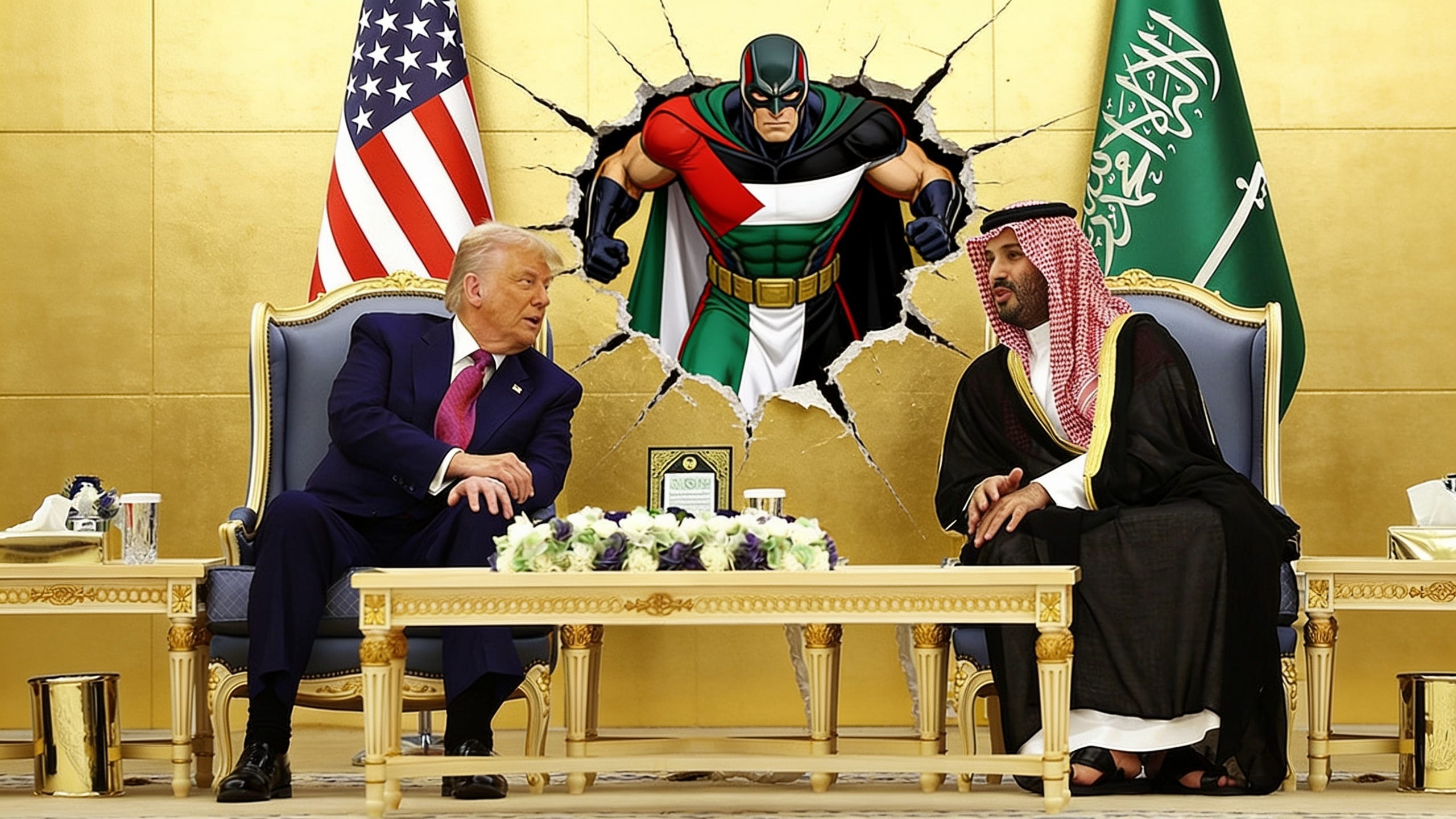
Bahraini riot police broke up a march in October 2023 and referred six men to the public prosecution. Human Rights Watch documented scores of interrogations across the kingdom, some involving children.
In Berlin, on Indigenous Peoples’ Day of that same month, police waded into an anticolonial demonstration outside the Foreign Ministry and seized the people holding Palestinian flags, telling organizers that Palestine had ‘nothing to do with colonialism’. The Berlin Senate issued a directive to schools on October 13 authorizing bans on the keffiyeh, on maps of Palestine, and on the words Free Palestine, on the grounds that such things could be interpreted as endorsing violence and might disturb the peace of the classroom. The European Legal Support Centre counted six hundred detentions in Berlin in nine days.
On October 12, the French interior minister sent a telegram to the prefects instructing them that pro-Palestinian demonstrations were to be prohibited. The Council of State later declined to strike the order down, holding that prefects should decide case by case, while noting that the wording had been ‘regrettably imprecise’. Marches in support of Israel, however, had no such difficulty obtaining permission.
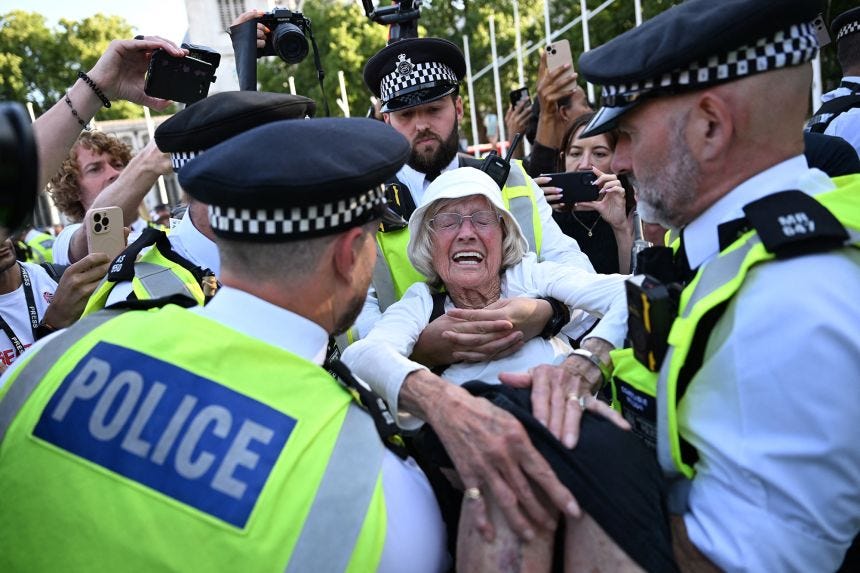
Then Britain. In July 2025 the government proscribed Palestine Action under the Terrorism Act 2000, making support for it punishable by up to fourteen years. Ordinary people responded by sitting in Parliament Square holding cardboard signs that read, I oppose genocide, I support Palestine Action. Police arrested them by the hundreds. Four hundred sixty-six on a single day in August, the largest single-day total by the Metropolitan Police in a decade. Nearly nine hundred in September. Official figures for the year to September 2025 showed terrorism-related arrests up six hundred sixty percent, with 1,630 of 1,886 tied to that one campaign. The average age of those arrested was fifty-seven. Among them were retired priests, a former Guantánamo detainee, war veterans, descendants of Holocaust survivors, an eighty-three-year-old woman with a walking frame. The United Nations human rights chief called the proscription a disturbing misuse of counterterrorism law. The government carried on.
On the night of March 8, 2025, plainclothes federal agents took Mahmoud Khalil from his apartment building in New York in front of his pregnant wife. They said his student visa was revoked. When he showed his green card, they said that was revoked too. He was flown to an ICE detention center in Jena, Louisiana, and held for a hundred and four days. He had been charged with no crime. The legal instrument was a Cold War provision of the Immigration and Nationality Act permitting removal when the Secretary of State decides a person’s presence damages American foreign policy. The immigration judge in Louisiana said plainly that she had no authority to question that determination. Just days later, also the Turkish student Rümeysa Öztürk was taken off a Somerville street by masked ICE agents, over an op-ed in a university newspaper. Litigation records describe more than five thousand people flagged and hundreds of visas revoked in the first half of that year.
Bahrain and Berlin. Cairo and Paris. London and Louisiana. Different constitutional traditions, different anthems, the same reflex.
“Kanafani understood that a Palestinian fighting in a refugee camp in Lebanon was fighting the same structure as a striking miner in Bolivia. He was killed for understanding it”
The Reflex Has a Reason
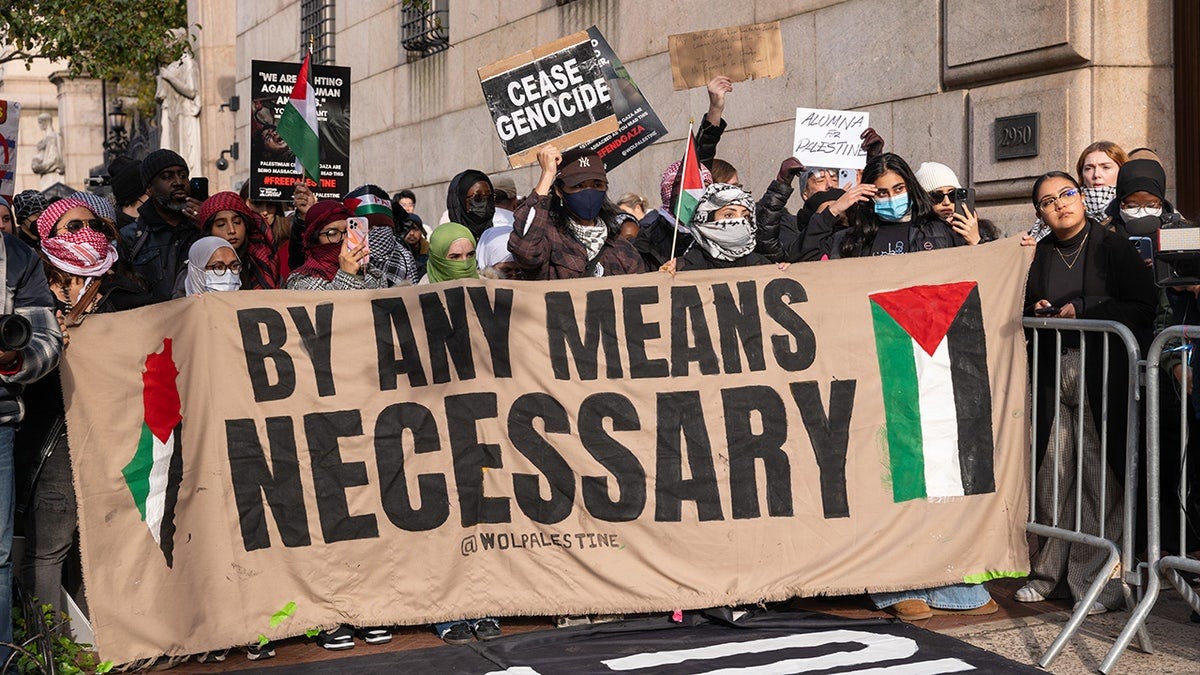
The comfortable explanation is that Western governments are merely clumsy, overcorrecting for antisemitism, and that Gulf autocrats are simply autocrats. That explanation collapses the moment you notice how precisely the repression is aimed. Not at violence but at a symbol. At a scarf. At a map. At the naming of something.
Palestine solidarity is treated as an emergency in both Riyadh and Westminster for the same reason: it is the one political demand that forces people to look at the structure of the world they live in, and to see who is standing on top of it.
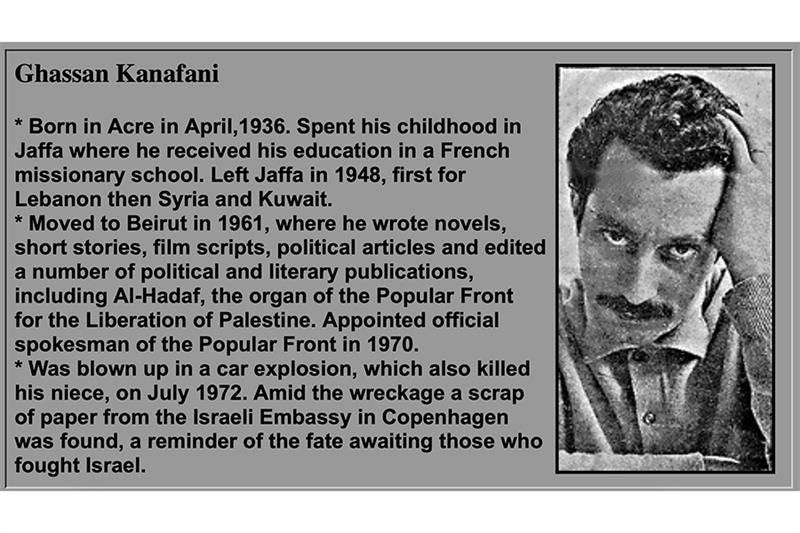
The Palestinian intellectual Ghassan Kanafani was killed in Beirut on July 8, 1972, when Mossad wired a bomb to the ignition of his car. His seventeen-year-old niece Lamees died beside him. He was a novelist and an editor, and for that he was executed in a residential street.
Kanafani named the enemy in three parts. American imperialism came first, and he placed Israel inside that category rather than beside it, because without imperial patronage the garrison cannot function. Second came the reactionary Arabic-speaking regimes whose survival depended on keeping their own populations quiet. Third came the Palestinian comprador class, the men prepared to broker their own people’s defeat in exchange for a percentage.
The second category has outgrown the Arabic-speaking world, and honesty requires saying so. I would say that Kanafani was describing a role, not a region: the local elite that draws its authority from aligning with US imperialism and therefore polices its own people on someone else’s behalf. That role is now performed on five continents.
Germany has become one of Israel’s most important arms suppliers while banning a scarf in its own classrooms. Britain proscribed a protest group and began arresting pensioners under terrorism legislation. France instructed its prefects to prohibit demonstrations outright. The F-35 that flattens a residential block in Gaza is assembled from components manufactured across the NATO membership such as in the Netherlands, which means the alliance is not a bystander to the bombing but a supply chain for it.
Argentina under Milei has restructured its foreign policy around loyalty to Washington and Jerusalem, voting against the hemisphere it belongs to.
The Philippines hosts American basing agreements while buying Israeli drones and armored vehicles to use against its own countryside. Japan holds tens of thousands of American troops on its soil and calls the arrangement a security partnership while the sexual abuse of young Japanese girls by American soldiers has turned endemic.
Egypt seals the Rafah crossing and calls it sovereignty. Jordan intercepts what flies over it and calls it airspace management.
The uniforms differ, the parliaments differ, even the levels of coercion differ. What does not differ is the function: Each of these governments derives some part of its legitimacy, its weapons, its market access, or its debt terms from the same center, and each therefore treats a demonstration for Palestine as a domestic threat rather than a foreign opinion. On the surface, a Bahraini interior ministry and a Berlin senate seem separated by every constitutional difference you can name. However, they are united by the single instinct that makes them both detest the Palestinian flag: maintaining the system.
“When the water a Gulf city drinks, the software that watches its own population, the food in its supply chain, and the current in its grid all run through Israeli firms and Israeli patents, then the survival of the ruling family becomes physically fused to the survival of the colonizer”
Two Pillars of Domination
Adam Hanieh, the Palestinian political economist, maps the regional structure with more precision. American domination of West Asia rests on two pillars. The first is Israel, planted by British power, inherited by Washington after 1967 once it had proven itself in battle, an armed garrison standing where the Suez Canal meets the Levantine coast. The second is the circle of oil monarchies, custodians of the largest hydrocarbon reserves and sovereign wealth funds on the planet, whose rulers convert their subjects’ oil inheritance into American treasuries, American weapons, American data centers, and American impunity.
Extend that model outward and the whole system becomes visible. The Gulf recycles petrodollars into the imperial core. Europe recycles its industrial capacity into the imperial arsenal. Latin American and Asian client states recycle their territory into imperial basing rights and their politics into imperial voting blocs at the United Nations. Israel supplies the surveillance software, the crowd control doctrine, and the battle genocide-tested equipment that each of these governments then turns on its own restless population.
Kanafani understood that a Palestinian fighting in a refugee camp in Lebanon was fighting the same structure as a striking miner in Bolivia. He was killed for understanding it. Half a century later the structure has more nodes, more shareholders, and better lawyers, and it still cannot tolerate the sight of one flag in one square, because the flag is the thread that, pulled hard enough, unravels the entire garment.
Every peace process of the last half century has been an attempt to fuse those two pillars (US/Israeli empire and the vassal states) into one structure. Egypt in 1979. Jordan in 1994. The Abraham Accords in 2020, when the Emirates, Bahrain, Sudan, and Morocco were arranged in Washington for photographs and each collected a fee. Morocco was handed American recognition of its colonization of Western Sahara. Sudan was granted removal from the state sponsors of terrorism list, though only after a transitional government presiding over an emptied treasury agreed to deposit 335 million dollars into a compensation fund and to recognize Israel as a surcharge on its own readmission to the world economy. The Emirates were promised advanced drones and a place in the F-35 queue. Saudi normalization has been dangled ever since, with civilian nuclear cooperation and a defense guarantee (that Iran has now turned useless) as the inducements.
“The UK does the exact same thing to its own population, yet still dares to call those "Arab monarchies" autocratic. Britain arrested more people under terrorism law over Palestine than Egypt arrested over Palestine at all”
Normalization Integrates Israel Into Vassal States
Trade between Israel and the Emirates went from roughly two hundred million dollars in 2020 to about three point two billion in 2024, a fifteenfold expansion in four years, formalized by a free trade agreement in force since 2023 (the start of the genocide). The categories matter even more than the totals: desalination, water technology, agritech, seeds, drones, cyber-surveillance, cloud infrastructure, logistics, grid interconnection.
Think for a second about what that means. When the water a Gulf city drinks, the software that watches its own population, the food in its supply chain, and the current in its grid all run through Israeli firms and Israeli patents, then the survival of the ruling family becomes physically fused to the survival of the colonizer. Palestinian liberation stops being an abstract moral question for these regimes and becomes an infrastructural threat. Their water arrives through the occupier. Their surveillance state is licensed from the occupier. Their nuclear ambitions are conditioned on kneeling to the occupier.
That was the design. Normalization existed to liquidate the Palestinian cause. It nearly worked. What broke the timetable was the resistance of October 2023 and the fury of ordinary people from Amman to Rabat to Sanaa, at an incomprehensible price in Palestinian blood.
The same Israeli integration into society is happening in the rest of the world: in Berlin, Washington, and London, for example. German arms export licenses to Israel. Elbit Systems subsidiaries in the English Midlands. F-35 components crossing the Atlantic. Endowments, sovereign funds, and public pensions holding the shares. University research partnerships. Police departments sending officers on training junkets. Cloud contracts. Surveillance software sold to the very agencies that arrested Mahmoud Khalil.
The flag threatens all of it because the flag has become the symbol of resistance to it all.
The Map Underneath the Morality
Ask why an empire will burn a whole people rather than lose this ground.
Roughly twenty million barrels of oil moved through the Strait of Hormuz each day in 2024, about a fifth of global petroleum liquids consumption, more than a quarter of all seaborne oil trade, plus around a fifth of the world’s liquefied natural gas, most of it Qatari. Add the Suez Canal, the SUMED pipeline, and Bab el-Mandeb. The region produces something on the order of a third of the world’s oil.
Whoever holds those valves holds a blade at the throat of the global economy, including the industrial ascent of China, whose goods and energy transit the same straits and the same Gulf ports. That is the prize, and Palestine sits on its hinge.
The Gulf monarchies’ assignment is to keep the valves open, prices agreeable, surplus recycled into imperial asset markets, and the population quiet. European governments hold a subcontract on the same job, which is why a German policeman tells an anticolonial coalition that Palestine “has nothing to do with colonialism” and believes he is enforcing the law while in fact he is defending a shipping lane. Or better yet: US Empire.

What the Crowd Starts Singing
Here is the moment the powerful fear, and it has already happened in cities that, on the surface, do not seem to share any political system whatsoever.
In October 2023 Sisi’s apparatus in Egypt called people into the streets for Gaza, expecting a managed display of loyalty. Thousands ignored the designated pens, marched from al-Azhar, and took Tahrir Square for under an hour. Then the chants of 2011 came back, bread and freedom and social justice, and the police descended. Around a hundred and fourteen arrests followed nationwide. United Nations special rapporteurs later took up cases of protesters held incommunicado and charged with joining a terrorist organization, some sitting in pretrial detention for years over a single afternoon in a square.
Sound familiar? The UK does the exact same thing to its own population, yet still dares to call "Arab monarchies" autocratic. Never the "democratic" West, of course. Britain arrested more people under terrorism law over Palestine than Egypt arrested over Palestine at all.
In Algeria, a state that built its legitimacy on anticolonial credentials and has never recognized Israel, marches for Gaza were tolerated until the crowds began singing songs about freedom and dignity. Permission was withdrawn.
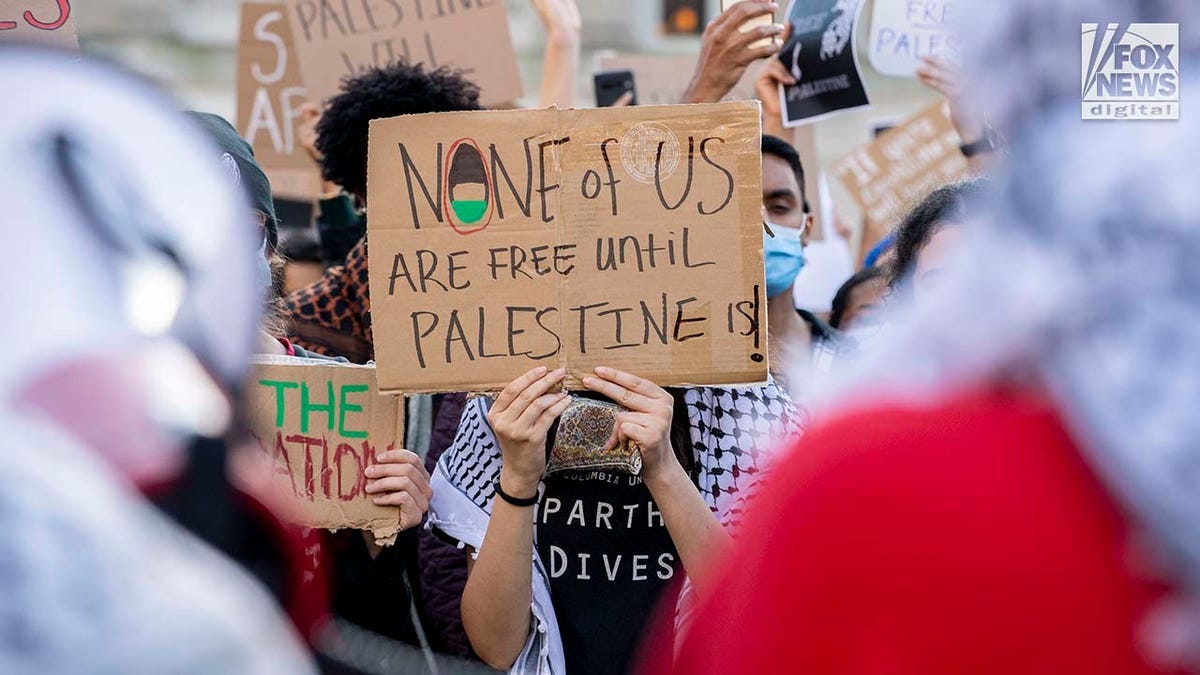
The same syntax appears in the West. In Berlin, students who came out for Gaza began asking about German arms licenses, then about who profits, then about the racialized policing of Neukölln, then about which lives the postwar German (“never again”) conscience was actually built to protect.
In Britain, the Palestine Action campaign moved from Gaza to the factory floor of an Israeli-owned arms firm in Bristol, and the state responded by inventing a new category of terrorist consisting largely of pensioners with markers and cardboard.
In the United States, encampments that began by demanding a ceasefire ended by demanding disclosure of endowment holdings, which is when the riot units arrived and the trustees discovered their principles.
Palestine is off-limits, because Palestine teaches people to ask who owns the machine. Nobody who owns the machine wants that lesson taught.
Race, Labor, and the Rampart
Theodor Herzl described the future Jewish state as a portion of a rampart of Europe against Asia, an outpost of civilization set against barbarism. In his diaries he imagined bringing cleanliness, order, and the well-distilled customs of the Occident (the “West”) to what he called a plague-ridden corner of the Orient.
Listen to the colonizer often enough and you notice that his inventory of accusations is a description of himself. He calls them filthy while STDs run through the tenements of his own industrial cities. He calls them barbaric while overseeing the camps, and the firebombing of civilians on an industrial scale. He calls them fanatical while quoting scripture to justify a land claim. He calls them lazy while living on their labor. He calls them treacherous, having arrived under a mandate he had already decided to violate. And today he calls them rapists while broadcasting the mass rapes of prisoners with glee. The accusation is always a confession. Or, as the Jewish psychologist Freud stated so fittingly: projection.
Lord Balfour, whose declaration is remembered as philanthropy, held views about Jews that would be named antisemitic today without argument. Europe did not love Jews, at least not the poor ones or the left-leaning ones. Europe wanted them elsewhere, and wanted the elsewhere to be strategically useful. That is the origin of the arrangement, and it explains why the loudest defenders of Israel in European parliaments today sit so comfortably beside parties that traffic in hatred. Zionism was, from the start, a way of exporting a European problem and getting a garrison in return.
But the problem was never the Jews. What crossed the Mediterranean was not a people, it was a doctrine, and the doctrine was Europe’s. The colonizers of Palestine carried Europe’s racism and white supremacy with them and set it up under the banner of Zionism and Jewish supremacy on someone else’s land.
For decades Palestinian workers from Gaza and the West Bank sold their hands cheap inside Israel, building the state that had taken their land. When that labor became politically inconvenient, Israel imported replacements from Nepal, India, Sri Lanka, Thailand. Gulf skylines rose the same way, on South Asian and African workers held under kafala sponsorship, passports in an employer’s drawer, wages withheld, bodies buried under a heat index no one in the capitalist class will ever feel. And in Europe, the same racial sorting decides which protest is a public order risk and which is a civic tradition, which grandmother is a terrorist supporter and which is exercising her ancient liberties, whose neighborhood gets the dogs and pepper spray.
A movement that sees this in Palestine will see it everywhere. That is the whole problem.
Climate Activism is a Palestinian Issue
Israeli warfare has moved past killing people to killing places. Remote sensing analyzed for the United Nations Environment Programme found that by spring 2025 more than ninety-seven percent of Gaza’s tree crops had been damaged, along with the overwhelming majority of annual crops, shrubland, and grassland. Later analysis put tree cropland destruction near ninety-eight percent, with most greenhouses gone. Something like thirty-seven million tons of rubble now sits on the soil, laced with asbestos and heavy metals. Forensic Architecture describes the agricultural destruction as deliberate, an act of ecocide. Olive groves that fed families for centuries are stumps. And now they do the same in Lebanon.
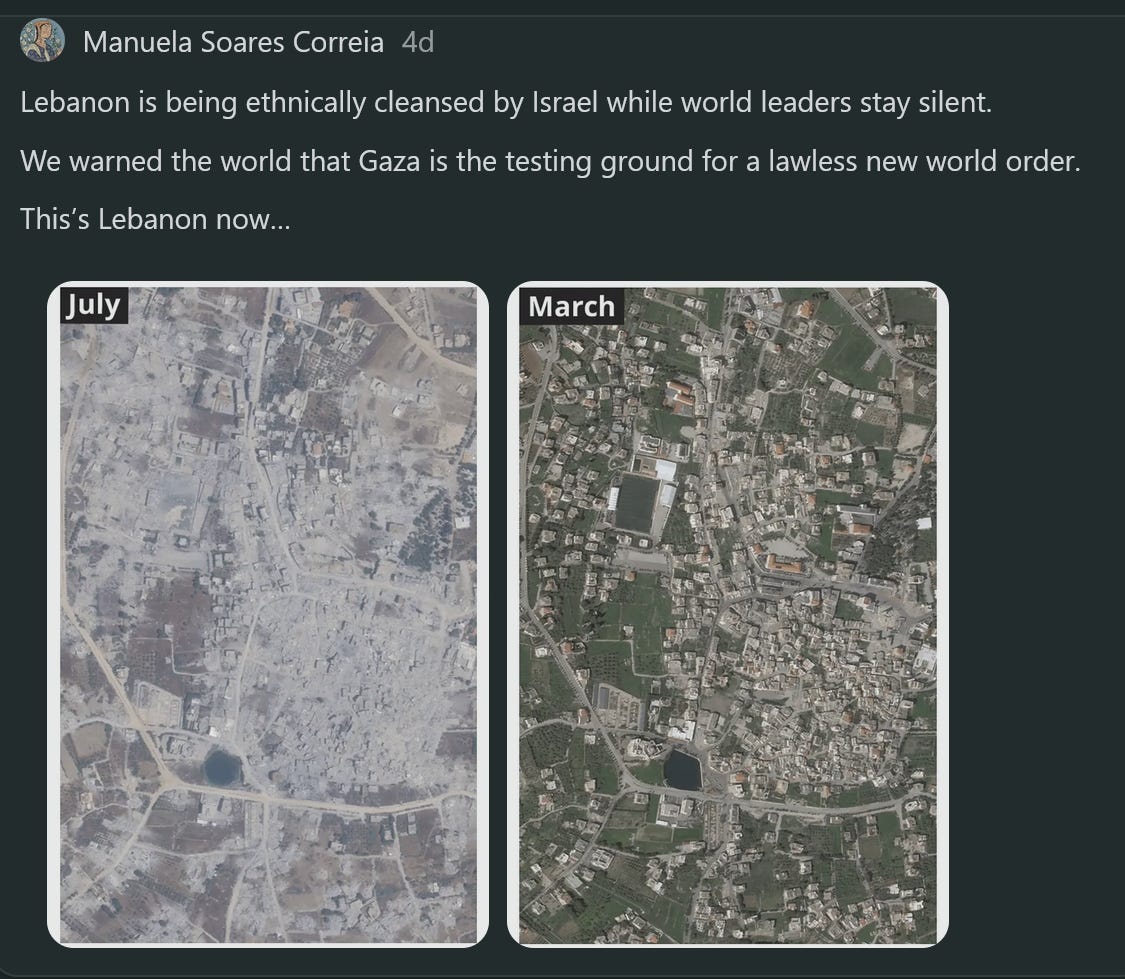
The American military is the largest emitter in the world. The same governments that lecture the poor about shared sacrifice are incinerating an entire territory’s ecology.
Meanwhile the petro-monarchies host the climate summits, arriving with delegations of oil executives, selling hydrogen and desert solar to Europe as green transition while taking land and water from farmers across North Africa. European governments buy that electricity and call it decarbonization.
Standing with Palestine seriously means standing against fossil capitalism, which is why fossil capital’s managers, in every hemisphere and every uniform, would rather you did not stand with Palestine at all.
What Algiers Learned From Dien Bien Phu
France held Algeria for a hundred and thirty-two years and called it France. In May 1954 the Vietnamese destroyed the French garrison at Dien Bien Phu and proved to every colonized person watching that the invincible could be beaten. Six months later Algerians began their war, and their leaders said openly where the nerve had come from: their brothers and sisters in Vietnam.
Solidarity then was not a hashtag. Abd el-Krim, the Rifian who had humiliated a European army in Morocco, was asked by the Vietnamese to organize politically among North African conscripts so they would not be spent as colonial cannon fodder in Indochina. Dockworkers refused to load weapons bound for Vietnam. Ports slowed. The line attributed to him still holds: the defeat of imperialism in one part of the world is its defeat in another.
Algerians carried the torch further, training and funding movements from Latin America to southern Africa while Israel armed the dictatorships those movements were fighting.
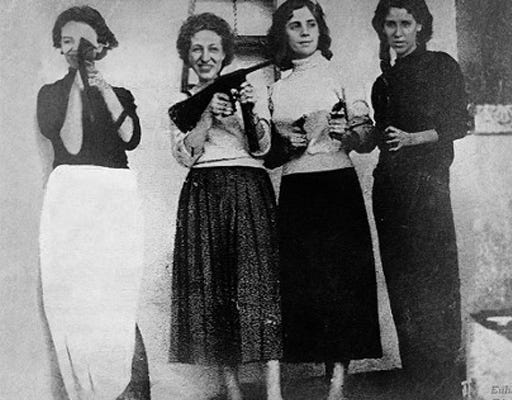
Nelson Mandela, whose memory is embalmed in the West precisely so his politics can be forgotten, said the oppressor determines the means of the struggle. International law recognizes the right of colonized peoples to resist, a fact that evaporates in broadcast studios the instant someone lifts a Palestinian flag. Indeed, none of these victories arrived through a ballot box. Not one. Power was never offered to the colonized until the colonizer had first been made to bleed for it.
“Colonized people are not inert matter waiting for the conscience of the powerful to stir. They are the ones themselves who have ended every colonial system that has ever ended”
The Authority They Want Everywhere
Look at the Palestinian Authority to see the future all governments under US Empire are working toward. Born of Oslo, sustained by donors, it became a subcontractor: coordinating with the occupier’s security services, arresting the resistance, jailing journalists, administering a bantustan while its officials collect permits and villas and abuse their population with impunity. Fanon warned in 1961 that the postcolonial national bourgeoisie would degenerate into a business agent for the former master, presiding over what he called the legalized robbery of its own people. He was describing the future.
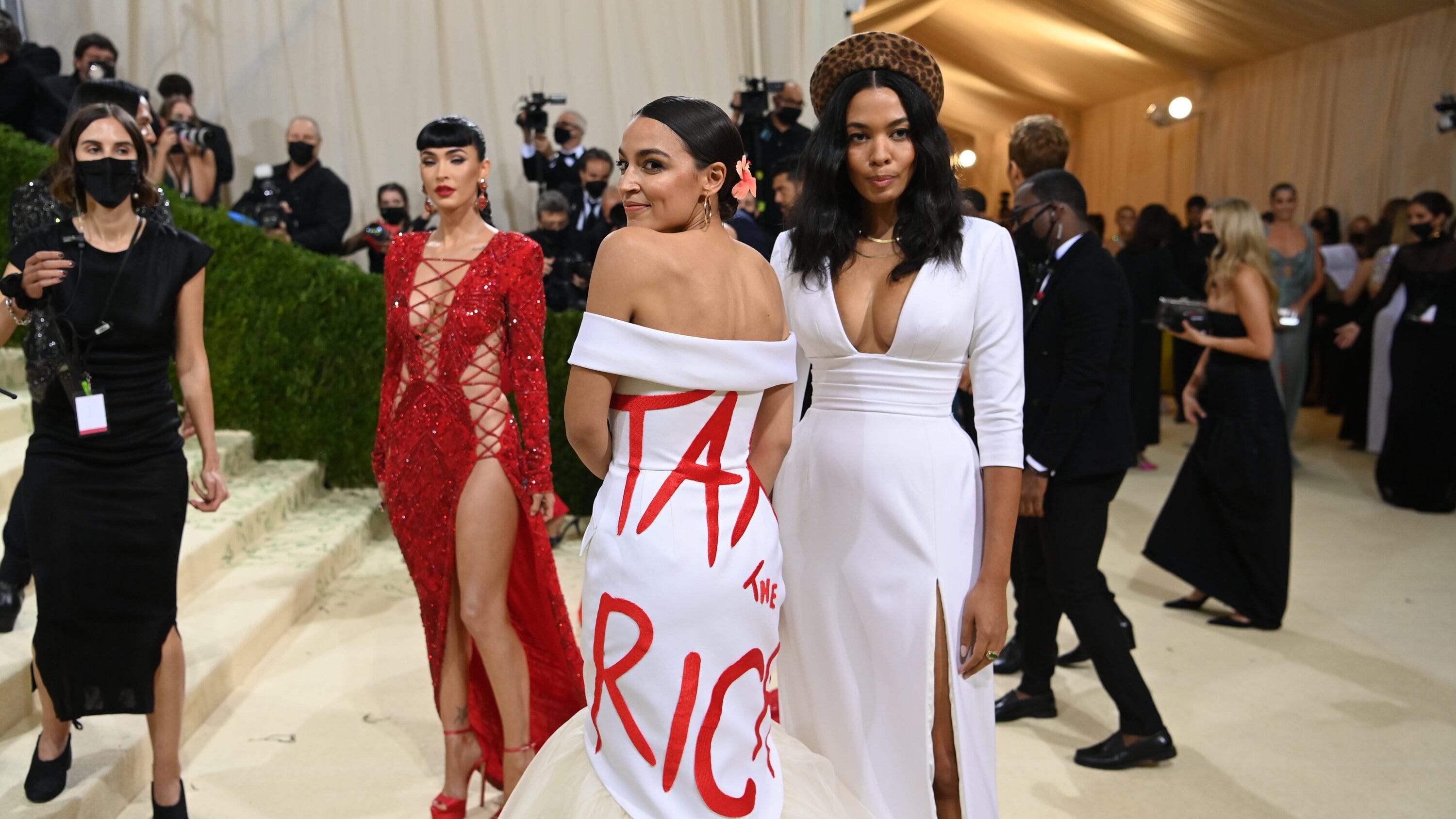
That is the model everywhere now. A native elite managing a population on behalf of capital and calling it sovereignty. Rabat aspires to it. So does the Berlin senator who bans a scarf while approving an export license, and the university president who calls the police on her own students and then testifies to Congress about campus safety, and the home secretary who reclassifies an eighty-three-year-old priest as a terrorist and calls it the rule of law, and the congresswoman who wore Tax the Rich to a gala where the seats cost thirty-five thousand dollars and then voted to protect half a billion dollars of Israeli missile defense while Gaza was being starved.
Hope, With Its Boots On
I will not end in the register of doom, because doom is a luxury reserved for people watching from a safe distance. Gramsci wrote from a fascist prison about pessimism of the intellect and optimism of the will, and the phrase survives because it names a discipline rather than a mood.
Hope here rests on a record. The Vietnamese won. The Algerians won. Apartheid in Pretoria fell, and the Israelis who armed it are now confronted with a world at boiling point. Colonized people are not inert matter waiting for the conscience of the powerful to stir. They are the ones themselves who have ended every colonial system that has ever ended.
The work is unglamorous and long. Learn the histories the empire buried: Algeria, Haiti, Vietnam. Find the choke point you can actually reach: the port, the arms plant, the endowment, the pension fund, the shipping contract, the city council, the union local. Refuse the framing that turns a colonized nation into a pity case with no politics and no right to resist. Stand with people fighting land oppression.
And understand why they hate you for it, whether the order comes from a palace or a parliament. They hate it because it threatens the status quo. They hate it because a flag painted on a wall in Neukölln and a chant in Tahrir Square and a cardboard sign in Parliament Square and a graduate student pulled from a New York apartment building all belong to the same idea: ending our monstrous system of global oppression.
What is wanted is not only a free Palestine. It is a free Palestine in a free world. The two cannot be separated, and the men who own the straits (and our schools, and our media) understand that better than we do.
- Karim
We fully understand that not everyone can be a paid subscriber, but you can support us by restacking our work.
This article was inspired by this wonderful interview with the Algerian activist and scholar Hamza Hamouchene. Watch it here, you will thank me for it:
"... That explanation collapses the moment you notice how precisely the repression is aimed. Not at violence but at a symbol. At a scarf. At a map. At the naming of something."
You are one of two writers (Joel Jenkins is the other one) who remind me of the saying 'the pen is mightier than the sword'
Brilliant!! Absolutely brilliant!!